Date: 16th October 2009
FROM : Communication Workers Union
TO: ALL BRANCHES WITH POSTAL MEMBERS
Dear Colleague
ROYAL MAIL DISPUTE: LEAKED ROYAL MAIL STRATEGY DOCUMENT
Branches will be aware of the media coverage of a leaked Royal Mail internal presentation of the company’s strategy in the current dispute, obtained by the BBC News Night” programme.
We have now seen the document in question. There can be no serious doubt about its authenticity. The document reveals an approach to the dispute, which while worrying and disappointing, comes as little surprise. In essence, the approach is to seek an agreement solely on Royal Mail’s terms. If this cannot be achieved Royal Mail will put in place “a framework for delivery of change without agreement”. This will involve various measures to “actively down dial the role of the Union” including “serve notice on the current Industrial Relations Framework and facilities/release arrangements and substitute the legal minimum”.
This approach – change driven through aggressively solely on Royal Mail’s terms is exactly what we have described throughout the dispute.
Media coverage has focused on the role of the Government. The document assumes “share holders support” for the company’s position but it is not clear how well founded this assumption is. It would be a matter of grave concern if a Labour Government had knowingly brought into a strategy designed to effectively de-Unionise a major publicly owned industry. We will of course be seeking immediate clarification of the Government’s position.
The document clarifies the reasons for Royal Mail’s rejection of the CWU’s offer of mediation. Its strategy sees a referral to mediation only as a last resort if “political will” to support Royal Mail’s aggressive approach of change by imposition evaporates.
Royal Mail does not want to adapt its plans by negotiation with the Union and it is not prepared to have its plans examined by a third party – such is the company’s fear of this option that it sees it only as a last resort if all else fails.
The document is conspicuous in its lack of concern for customer service. The only references to customers are in relation to the political risk of losing support.
The Union’s strategy remains unaffected. We will continue to work to seek change by genuine agreement, which protects the jobs, earnings and working conditions of our members and preserves a real commitment to customer service.
Given that the document is now in public domain, we have attached a copy. We would ask Branches to share the themes within the document with the membership. If anyone did have any doubts about the importance of supporting the union this document should be sufficient to dispel them.
To watch the coverage on BBC Newsnight please click on the following link: http://bbc.co.uk/i/ndtnq/.
Yours sincerely
Billy Hayes Dave Ward
General Secretary Deputy General Secretary (P)

The imperfectly communicated reverie of a faulty autodidact. Please make his day more real by responding.
Tuesday, 20 October 2009


Friday, 9 October 2009
Obama's peace
Today we hear that President Obama has been awarded the Nobel Peace Prize for 2009. The committee's reasons are to do with "his extraordinary efforts to strengthen international diplomacy and co-operation between peoples" (BBC Homepage). Who am I to disagree with this laureateship?; the committee must have some criteria that they judge Obama to have satisfied http://nobelprize.org/nobel_prizes/peace/laureates/2009/ . My feeling, however, is that we are barely into his term and that there is, so far, ostensibly, little beyond the colour of Obama's 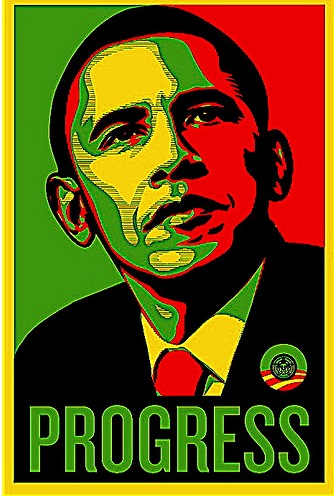 skin to suggest change in US attitudes and that, essentially, her policies and pursuit of self-interest in the wider world will continue.
.
.
The idea of state, borders and hegemony in any nation's foreign policy is called realpolitik; that hardened sense of self-interest is what has driven the United States' neo-imperialistic actions for a hundred years or more. The federal government of that nation throughout the 20th Century has attempted to impose its prevailing ideology upon its own people and also the rest of the planet, such that any alternative view or movement to freely pursue any other kind of political format is either stillborn by the efforts of the malicious midwifery of the CIA or subjected to such harsh conditions in its infancy, that it grows up in its parent communities or nations as a hardened, brutal and untrusting youth; like many a youth who has a healthy view to maintaining an element of freedom in their life, it may resort to aggressive means, if necessary, as the only viable route towards maturity. (My simple example would be Soviet Russia, which in reaction to Great War developments, threw off Imperialism in pursuit of Internationalism, only to be ostracized by Capital and driven into a defensive corner which preceded the 'paranoia' of Stalinism.)
There are historians who could reel off the top of their heads the instances of intervention by the US in scores of countries since its cynically late intervention in World War II. Some of the more widely known are the Phillipines, Korea, Vietnam, Cuba and a host of South American nations. The excuses used for intervention, militarily or otherwise, are variously labelled 'democracy', 'freedom', 'rights' over perceived 'oppression' and, by extension, 'good' over 'evil'. These are certainly emotive terms, rallying terms, values held by the majority of us, I suspect, as worth fighting for. If we consider that those countries which have been subject to the attentions of the US and its allies in the aforementioned ways might just have the same desire for democracy, freedom, rights and the common good as the electorate of the US, then surely there must be common ground upon which to use diplomacy to resolve contentious issues. Is it not so that the whole community of nations has to deal with a wholly more pressing problem, one that involves protecting the environment in order to make life viable at all?
So, 'congratulations' to President Obama, but we know that he has so many hurdles to overcome: entrenched opposition from narrow-minded bigotry; self-interested individuals backed by corporations that seem to hold the short-term satisfaction of shareholders or vested interests in overseas markets over longer-term imperatives for the planet; a pervasive PR-influenced national ideology that sees socialism in any form as creeping Stalinism, which itself was an example of what happens to youthful nations subject to vitriolic criticism and the most aggressive forms of realpolitik.
Recommended reading: Chomsky, N. (1997). World Orders, Old and New London: Pluto
skin to suggest change in US attitudes and that, essentially, her policies and pursuit of self-interest in the wider world will continue..
.
Obama: more than a colour problem.
.
.
.
.
The idea of state, borders and hegemony in any nation's foreign policy is called realpolitik; that hardened sense of self-interest is what has driven the United States' neo-imperialistic actions for a hundred years or more. The federal government of that nation throughout the 20th Century has attempted to impose its prevailing ideology upon its own people and also the rest of the planet, such that any alternative view or movement to freely pursue any other kind of political format is either stillborn by the efforts of the malicious midwifery of the CIA or subjected to such harsh conditions in its infancy, that it grows up in its parent communities or nations as a hardened, brutal and untrusting youth; like many a youth who has a healthy view to maintaining an element of freedom in their life, it may resort to aggressive means, if necessary, as the only viable route towards maturity. (My simple example would be Soviet Russia, which in reaction to Great War developments, threw off Imperialism in pursuit of Internationalism, only to be ostracized by Capital and driven into a defensive corner which preceded the 'paranoia' of Stalinism.)
There are historians who could reel off the top of their heads the instances of intervention by the US in scores of countries since its cynically late intervention in World War II. Some of the more widely known are the Phillipines, Korea, Vietnam, Cuba and a host of South American nations. The excuses used for intervention, militarily or otherwise, are variously labelled 'democracy', 'freedom', 'rights' over perceived 'oppression' and, by extension, 'good' over 'evil'. These are certainly emotive terms, rallying terms, values held by the majority of us, I suspect, as worth fighting for. If we consider that those countries which have been subject to the attentions of the US and its allies in the aforementioned ways might just have the same desire for democracy, freedom, rights and the common good as the electorate of the US, then surely there must be common ground upon which to use diplomacy to resolve contentious issues. Is it not so that the whole community of nations has to deal with a wholly more pressing problem, one that involves protecting the environment in order to make life viable at all?
So, 'congratulations' to President Obama, but we know that he has so many hurdles to overcome: entrenched opposition from narrow-minded bigotry; self-interested individuals backed by corporations that seem to hold the short-term satisfaction of shareholders or vested interests in overseas markets over longer-term imperatives for the planet; a pervasive PR-influenced national ideology that sees socialism in any form as creeping Stalinism, which itself was an example of what happens to youthful nations subject to vitriolic criticism and the most aggressive forms of realpolitik.
Recommended reading: Chomsky, N. (1997). World Orders, Old and New London: Pluto
Oh Obama!
David Bromwich writes as if Obama’s main problem were a deluded search for bipartisanship in the face of intransigent Republican rascals – Rush Limbaugh, Dick Cheney, Fox TV and so forth (LRB, 22 October). It might be better to admit that the left has deluded itself into believing that Obama, a nice, eloquent young man from Harvard with no gubernatorial and little legislative experience, has some sort of magic wand, when the truth is that he’s out of his depth. He is, unfortunately, just one more Democrat who campaigned on a promise to change everything about the way Washington works. However popular that theme may be, it is ignorant and naive. The Washington political system has proved to be extremely resilient. You can huff and puff about change and chant ‘Yes we can’ as much as you like but the system will remain resolutely intact. History shows that the politicians who get results are the ones who understand the system best and are the best at making it work for them. LBJ is the classic example.
Similarly, a better sense of realpolitik and less reliance on eloquence would get Obama further in foreign policy. It’s no good just announcing a plan to solve things in the Middle East. The Israel-Palestine conflict is part of a long holy war which can only be managed at best, not solved. Serious advances are usually born of crises, such as the Yom Kippur war. The next opportunity may be an Israeli war with Iran.
As it is, here we are with Guantánamo Bay still in operation, the Afghan war likely to go on and get bigger, no progress at all in the Middle East, US unemployment over 10 per cent and healthcare perhaps already doomed. The collapse in Obama’s ratings suggests he could well lose the mid-term elections. And of course Jimmy Carter is right: some of that visceral reaction is bound to be racist. Hard to see how it could be otherwise.
It’s extraordinary how the Democrats keep on doing this. Jimmy Carter started it by ‘running against Washington’ – an understandable stance after Watergate – but all it really meant was that he made a hopeless hash out of relations with Congress and his legislation got nowhere. Remember his energy independence bill which he declared to be MEOW (the moral equivalent of war)? It got absolutely nowhere. It was the same with Clinton. Imagine being stupid enough to start off affronting all manner of powerful pressure groups by making gays in the military the first issue you tackle. Or being even more stupid in putting your wife in charge of health reform. If he wanted to do that, fine, but he would have had to do what JFK did with Bobby, make him a fully accountable cabinet member with the advice and consent of the Senate. To hand such a key area of reform to his wife and for her to remain an unaccountable private citizen was ludicrous.
The common factor, of course, was that both Carter and Clinton were Southern governors of smallish states in which the governor gets his budget through and then uses his patronage to do whatever he wants, utterly dominating the state legislature. Both seemed to imagine that being president wouldn’t be very different and that you could use cronies for everything. Obama’s own background as a community worker and campaigner isn’t any more appropriate, and giving foreign affairs over to Bill Clinton’s wife may not have been clever: thus far her diplomatic abilities don’t appear much greater than they were in healthcare reform. I fear a great disappointment is in the making.
R.W. Johnson
Cape Town
Cape Town
Thursday, 8 October 2009
Alf Garnett; attitudes

Alf Garnett argues about Elsie's debt to Sabu the cornershop owner
'Till Death Us Do Part' and the sequel series, 'In Sickness and in Health', were comedy sitcom tv programmes of the 1960s and 1970s which caused controversy quite often because of their content, including what would be considered today as mild swearing and (although the debate was less clear than it is nowadays) race, racism and racialism. An ex-postman mate of mine had just posted a link showing part of one of the episodes situated in an Asian cornershop, where Alf's recently-deceased wife had a 'slate' which remains unpaid. Present in the scene are Alf, Sabu (owner), and a 'camp' West Indian guy. Bigot Alf, we anticipate will 'go off on one', while the Asian/Black tension that exists/existed will be evident, but is gently dealt with. I reckon that the writers, the actors and perceptive viewers will pick up on the irony. Of course, irony is a feature of drama imperceptible to some 'receivers'. The following dialogue I have taken from the recent Facebook interaction between myself and Royal Mail friends of mine. It has the potential of a decent sit-com in itself and goes to show how comedy writing 'by committee' has its benefits.
'Till Death Us Do Part' and the sequel series, 'In Sickness and in Health', were comedy sitcom tv programmes of the 1960s and 1970s which caused controversy quite often because of their content, including what would be considered today as mild swearing and (although the debate was less clear than it is nowadays) race, racism and racialism. An ex-postman mate of mine had just posted a link showing part of one of the episodes situated in an Asian cornershop, where Alf's recently-deceased wife had a 'slate' which remains unpaid. Present in the scene are Alf, Sabu (owner), and a 'camp' West Indian guy. Bigot Alf, we anticipate will 'go off on one', while the Asian/Black tension that exists/existed will be evident, but is gently dealt with. I reckon that the writers, the actors and perceptive viewers will pick up on the irony. Of course, irony is a feature of drama imperceptible to some 'receivers'. The following dialogue I have taken from the recent Facebook interaction between myself and Royal Mail friends of mine. It has the potential of a decent sit-com in itself and goes to show how comedy writing 'by committee' has its benefits.
Martin Archer: Brilliant. They're scared to show this sort of thing now; what a state of affairs!
David Hume: Alf; we're laughing at him, not with him. That's right Nick, isn't it ?!?!
Martin Archer: I think the point is that Alf's a buffoon amongst buffoons, Dave. We're all of us buffoons.
David Hume: Mart', for a moment, I thought you were calling 'them'.... Baboons ! Mind Your Language, eh ?!?!
Alvin Drummond: Fuckin' hilarious. we should have MORE of this good old fashioned English comedy on English TV.
David Hume: Sitting there in your gravy stained In-ger-land shirt !
Nick Fagan(quoting from the scene): 'Bloody marvellous! They're flying 'em in now'.
Martin Archer: Now 'Mind Your Language' was funny too, in parts, but to see the scamming it
gets now by those half-wit politically-correct talking heads on countdown shows, you'd think it was inciting murder. Foreign people are funny; foreign people think Brits are funny when we visit their countries. So the fuck what! Offended by it? Yes, MYL was ignorant and it hasn't dated well, but I take offence at people who want even now to change the natural and casual racism that our grandparents and even parents exhibited merely out of a similar sort of ignorance. But then, I know quite a few thoroughly ignorant people of my generation who I dont expect to change, but we have to allow them to get on with it, too. But what annoys me intensely is that there are adherents to foreign ideologies in this country that want to change traditional British attitudes; I find them just as intolerant as it is said English people were in the 70s for instance. Rant concluded.
In my final comment above, and in response to ethnic Scot Dave Hume's reference to it, I cite another contemporary and inferior show, Mind Your Language, set in an evening school where disparate and stereotypical foreign visitors/immigrants to these shores meet with their English tutor to improve their mastery of the English language. The characters were depicted by actors having some commonality with the ethnicity portrayed (itself a contrast to the blacked-up comedians of It Ain't Half Hot Mum or even David Sachs's Manuel in Fawlty Towers): a French actress doing her ooh la la maid routine; an Asian in turban with rocking head movements; a Latin type, suitably mustachioed; and I seem to remember a severe fraulein in Valkyrie plaits). There is so much written on this subject out there by 'post-colonial' academics, including the wonderful 'Orientalism' by Edward Said, with which we are able to engage with debates around race and offence, ignorance through insularity and the Other in general.
I went to Egypt and was laughed at (not necessarily ridiculed) by the locals for my bald ''Kojak'' head and hairless face. I wonder if, after a while of such treatment, I would have become somehow oppressed by such behaviour. We are two or three generations on from the days of Till Death Us and MYL and the offspring of the original immigrants of those days understandably demand a degree of respect in this the land of their birth. The UK is a country in which they do not necessarily see themselves as 'English' or perhaps 'Scottish' in the way that the ethnic Whites of these islands feel secure in their identities, whether those identities are chosen or are 'given'.
Thanks to Dave Hume, Nick Fagan, Alvin Drummond and the writers of Alf (Warren Mitchell), http://www.museum.tv/archives/etv/T/htmlT/tilldeathus/tilldeathus.htm and Mind Your Language http://www.imdb.com/title/tt0075537/.
Bullingdon boys

The sort of people we continue to elect: top picture, far left is George Osborne, class of '92; bottom picture, second from left is David Cameron, prime minister in waiting and bottom row right, Boris Johnson, London mayor.
The Bullingdon Club of Oxford elitists. We continue to elect people who have nothing in common with most of us.
This is not inclusive democracy

(NB. Although these are my opinions, this is not my own research; the photos have been liberated by various daily newspapers and published previously)
check out this brilliant Trotskyist comment on class war and to see that the holders of the copyright of this picture have withdrawn their permission for its use due to 'commercial reasons'!
Wednesday, 7 October 2009
Drummed Up
Martin Archer: has read up to p.50 of Günter Grass's 'The Tin Drum'. It's intriguing but there are a lot of pages to go. Is life too short for this novel ... does anyone know it? ... advise please.
30 September at 21:21 ·
Jacqui Beere: I don't, but the pop group Japan had an album of the same name.
Martin Archer: Aah, perhaps I should consult David Sylvian's website for any clues. Mick Karn... great bass lines... do you not think?
Jacqui Beere: I liked their music very much, especially Tin Drum. 30 September at 21:31
David Hume: Sorry, I've written them off as middle-class art school boys. Just playing at it. Am I wrong ? 30 September at 21:36
Andy Bossom: Excellent book...I think it is worth perservering with...the film is also in my top 10 of all time!! 30 September at 21:39
Tat Mersy: Great book, stick with it. Only one of his I've read, quite a while back now. Haven't seen the film. 30 September at 21:59
Martin Archer: Thanks for the comments; I've decided to stick with it. Glad I've not seen the film, though Andy, as I'd never have bothered with the book. Caroline, Sam's colleague, is half
German and recommended it to Sam for me to read. So it would be churlish not to give it a go. Anyway, I don't recall reading before about a dwarvish obsessive drummer as set against the rise of Nazism! As for Dagenham Dave's comments on Japan, I'm sure they're not far from the truth, but when I look back on my musical (British music) interests, there is a thread of art school running through my favourite stuff, but as played by baby boomer sons and their younger siblings, poorly advocating anything sensible, but enthusiastically reproducing for themselves that one positive mode of the 20th century, in my opinion... black American popular culture.
01 October at 20:22
Martin Archer: Today have listened to the World Book Club Radio 4 interview with Grass. Interesting. Thanks for the pointer Tat. Mon at 18:22
Tat Mersy: I've just re-listened to it myself, reminding myself of what a superbly significant piece of post-nazi literature this book is, (my bookshelves proclaiming me to be a fanatic Holocaust watcher.) If I could wish myself anything it would be the gift of writing with such clarity and cool pertinence on a subject that has dogged me since my teenage years.
Martin Archer: The modern state of Israel irritates me but my reactions are always tempered by reflecting on the Jewish people's history, the diaspora and the Holocaust. What I liked in Grass (notwithstanding his literary skills, as outlined by you above) is a wonderful candour concerning his own people's behaviour in the 20th Century and his denial that there is anything other than reality mirrored in his story( rather than any symbolic significance to be found in the props, e.g. the tin drum, central to Oskar's biography). I must admit, that I tend to stay clear of films dealing with the Holocaust, cos I anticipate their content and don't like to be brought down by the horror, the pathos, the discomforting proximity of the relative recentness of those events. I'd be interested, however, in reading how you have reacted to the whole theme and how you 'watch'.
Andy Bossom: I completely understand many of your arguments. It always seems supremely ironic to me that the modern Israeli state is verging on the "fascistic" at times. Does every state or race have to find someone else to persecute?? I usually never watch films once I have read the book - but I actually watched the Tin Drum as film before reading the book. The film is European art house rather than "Hollywood" style sensationalism. the film intrigued me to read the book. I rarely watch any "war" related film due to usually having difficulties with political interpretation and the shifting sands of historical perspective. In fact I am not even sure that film and print are mutually compatible! However you have enthused me enough to try and find time to re-read Oskar's story again!
Martin Archer: Andy, I don't know how you feel about the way people excuse their actions in such horrific situations. I am quite understanding I suppose of how people can do all sorts of awful things in the name of an ideology/belief system. I readily admit, in my self analysis, that I am moulded by just about every theory I read! I can in one month be persuaded by Marx as well as Nietzsche, Darwin as well as Genesis, Nationalism as well as Internationalism and the list of contradictions goes on. The person with convictions is the person who is sometimes the most dangerous!
Andy Bossom: There always seems to me an inherent contradiction between political ideology and fundamental "humanity". If there is no common ownership of land, does the peasant farmer have the "right" to kill the capitalist landowner in order to acquire a plot of land to feed his family. Or should he allow himself and family to starve due to lack of access to the means of production? Does anyone have the right to kill another human being? I have always had leftist tendencies, but prefer the notions of justice, freedom and equality rather than the armed struggle. As an individual in modern day Britain it is easy to decry fascism, but how would you act if you were a teenager in Nazi Germany in the the late 1930s? To conform to the prevailing ideology is the path most individuals take. I believe a critical analysis is fundamental to understanding the world around you, but how critical can you be with a Nazi gun to your head?
Martin Archer : There were, of course, and are, persons of strong enough character to be able to stand with principles that demonstrate their ''fundamental 'humanity'''. These are the 'heroes' that quite often are themselves convinced of a reward greater than might be attainable in this life. This is where religious belief may overtake political ideology in an individual's raison d'etre. The trouble, as you are no doubt aware, is that such 'fanaticism' becomes, in the idiom of those they oppose, a perversion, a wickedness of sorts. Perspective colours judgement. In terms of our initial theme as dealt with by Grass, the types of people I have in mind were conscientious objectors, notably Jehovah's Witnesses and others, who, in contrast to the sad fate of Jewish detainees, might have, at the signing of a declaration of fault, freed themselves from concentration camps and from an untimely death had they not peaceably made their stand. Again, the difference is more than subtle in their behaviour from those who might kill or resort to some other violent or otherwise transgressive action, to take what is theirs (within most estimates of what is right) but is denied them through prevailing power relations.
Andy Bossom: I suppose every individual has to decide how they wish to order their thinking. You can attach yourself to a religious code or political ideology or indeed adopt your own individual moral or ethical standpoint. I suppose the difficulty is in deciding how far you can move from that particular perspective. Or do the ends justify the means? There have been reported cases of those dissident Nazis who decided to fight fascism from within. Rather than openly confront they appear to outwardly conform. No one can see the inner mind of another individual and that is where true freedom can be located. you can then work against the system from within - perhaps helping some jewish detainees to escape their untimely death. I agree that once an individual believes that a greater heroic status will be bestowed upon them on sacrificial death, then it becomes much more difficult to counter. I have often wondered what my position would have been in 1939. Can you be a conscientious objector when you are needed to fight fascism? Could you sacrifice your moral position as a Jehovah's Witness in order to defeat an aggressive dictator? Should principles be put to one side for the "greater good"? Or is there any such thing as the Greater Good? Perhaps it is merely an expression of the prevailing cultural hegemony. English soldiers were not so much fighting fascism as "defending" their own "way of life!
Tat Mersy: I wonder if those with a declared political ideology or religious belief found it easier to kick against the Nazis than their own convictions. Although, it must be acknowledged that many bog standard, non-religious, apolitical Germans took a discreet stand against the regime. These people hid Jews, adopted their children or the family silver when their neighbours went into hiding, mobs of non-Jewish women stormed prisons to secure the release of their Jewish men-folk, camp employees smuggled supplies in and artwork out - an astounding amount of pictures, painted in foodstuffs, poetry and sculpture was smuggled out, all of it tiny due to the scarce resources. Oskar Shindler is an obvious, media-saturated example of ordinary volk made extra-ordinary by the times they lived in. And Raul Wallenberg, I've had a crush on Raul since I was 15. A young, Swiss diplomat, he disappeared behind the iron-curtain at the war's end, having secured travel documents for thousands of Jews during the war years.
Martin Archer: Just red a bit about Wallenberg's humanitarian and selfless stance, Tat. Our three-way discussion has revealed a number of reasons why folks behave the way they do. Simple belief in what is right over what is wrong seems to be the finest of the qualities displayed out of all the examples we've come up with; the so-called 'golden rule' of treating others the way we would be treated seems the touchstone to moral rectitude. Yet that conviction-crippling emotion called Fear... fear for family and friends' welfare should we act in the right way... must be difficult to overcome in a situation such as the intimidating rise of Nazism. I guess that is where the true definition of heroic action lies. Andy's development of how we might rationalise or 'order our thinking' is very much at the centre of how peaceable means can become militant means; how, if we are religiously 'devout', we are bizarrely moved to do God's work ourselves rather than leaving it to God to sort out. We can see such action in many examples, from South American Catholic priests who take up arms, to Islamists who maim indiscriminately and execute for effect. Were any of us interested in developing this discussion I might ask, How has postmodernity worked upon dissolving those grand ideological narratives that appeal to individuals' senses of patriarchy, eg., nationalistic defence of the realm against a perceived evil dictator or empire... the axis of evil comes to mind? Is it today possible for governments to mobilise whole populations toward fulfilling an idea... Liebensraum for instance?
30 September at 21:21 ·
Jacqui Beere: I don't, but the pop group Japan had an album of the same name.
Martin Archer: Aah, perhaps I should consult David Sylvian's website for any clues. Mick Karn... great bass lines... do you not think?
Jacqui Beere: I liked their music very much, especially Tin Drum. 30 September at 21:31
David Hume: Sorry, I've written them off as middle-class art school boys. Just playing at it. Am I wrong ? 30 September at 21:36
Andy Bossom: Excellent book...I think it is worth perservering with...the film is also in my top 10 of all time!! 30 September at 21:39
Tat Mersy: Great book, stick with it. Only one of his I've read, quite a while back now. Haven't seen the film. 30 September at 21:59
Martin Archer: Thanks for the comments; I've decided to stick with it. Glad I've not seen the film, though Andy, as I'd never have bothered with the book. Caroline, Sam's colleague, is half
German and recommended it to Sam for me to read. So it would be churlish not to give it a go. Anyway, I don't recall reading before about a dwarvish obsessive drummer as set against the rise of Nazism! As for Dagenham Dave's comments on Japan, I'm sure they're not far from the truth, but when I look back on my musical (British music) interests, there is a thread of art school running through my favourite stuff, but as played by baby boomer sons and their younger siblings, poorly advocating anything sensible, but enthusiastically reproducing for themselves that one positive mode of the 20th century, in my opinion... black American popular culture.
01 October at 20:22
Martin Archer: Today have listened to the World Book Club Radio 4 interview with Grass. Interesting. Thanks for the pointer Tat. Mon at 18:22
Tat Mersy: I've just re-listened to it myself, reminding myself of what a superbly significant piece of post-nazi literature this book is, (my bookshelves proclaiming me to be a fanatic Holocaust watcher.) If I could wish myself anything it would be the gift of writing with such clarity and cool pertinence on a subject that has dogged me since my teenage years.
Martin Archer: The modern state of Israel irritates me but my reactions are always tempered by reflecting on the Jewish people's history, the diaspora and the Holocaust. What I liked in Grass (notwithstanding his literary skills, as outlined by you above) is a wonderful candour concerning his own people's behaviour in the 20th Century and his denial that there is anything other than reality mirrored in his story( rather than any symbolic significance to be found in the props, e.g. the tin drum, central to Oskar's biography). I must admit, that I tend to stay clear of films dealing with the Holocaust, cos I anticipate their content and don't like to be brought down by the horror, the pathos, the discomforting proximity of the relative recentness of those events. I'd be interested, however, in reading how you have reacted to the whole theme and how you 'watch'.
Andy Bossom: I completely understand many of your arguments. It always seems supremely ironic to me that the modern Israeli state is verging on the "fascistic" at times. Does every state or race have to find someone else to persecute?? I usually never watch films once I have read the book - but I actually watched the Tin Drum as film before reading the book. The film is European art house rather than "Hollywood" style sensationalism. the film intrigued me to read the book. I rarely watch any "war" related film due to usually having difficulties with political interpretation and the shifting sands of historical perspective. In fact I am not even sure that film and print are mutually compatible! However you have enthused me enough to try and find time to re-read Oskar's story again!
Martin Archer: Andy, I don't know how you feel about the way people excuse their actions in such horrific situations. I am quite understanding I suppose of how people can do all sorts of awful things in the name of an ideology/belief system. I readily admit, in my self analysis, that I am moulded by just about every theory I read! I can in one month be persuaded by Marx as well as Nietzsche, Darwin as well as Genesis, Nationalism as well as Internationalism and the list of contradictions goes on. The person with convictions is the person who is sometimes the most dangerous!
Andy Bossom: There always seems to me an inherent contradiction between political ideology and fundamental "humanity". If there is no common ownership of land, does the peasant farmer have the "right" to kill the capitalist landowner in order to acquire a plot of land to feed his family. Or should he allow himself and family to starve due to lack of access to the means of production? Does anyone have the right to kill another human being? I have always had leftist tendencies, but prefer the notions of justice, freedom and equality rather than the armed struggle. As an individual in modern day Britain it is easy to decry fascism, but how would you act if you were a teenager in Nazi Germany in the the late 1930s? To conform to the prevailing ideology is the path most individuals take. I believe a critical analysis is fundamental to understanding the world around you, but how critical can you be with a Nazi gun to your head?
Martin Archer : There were, of course, and are, persons of strong enough character to be able to stand with principles that demonstrate their ''fundamental 'humanity'''. These are the 'heroes' that quite often are themselves convinced of a reward greater than might be attainable in this life. This is where religious belief may overtake political ideology in an individual's raison d'etre. The trouble, as you are no doubt aware, is that such 'fanaticism' becomes, in the idiom of those they oppose, a perversion, a wickedness of sorts. Perspective colours judgement. In terms of our initial theme as dealt with by Grass, the types of people I have in mind were conscientious objectors, notably Jehovah's Witnesses and others, who, in contrast to the sad fate of Jewish detainees, might have, at the signing of a declaration of fault, freed themselves from concentration camps and from an untimely death had they not peaceably made their stand. Again, the difference is more than subtle in their behaviour from those who might kill or resort to some other violent or otherwise transgressive action, to take what is theirs (within most estimates of what is right) but is denied them through prevailing power relations.
Andy Bossom: I suppose every individual has to decide how they wish to order their thinking. You can attach yourself to a religious code or political ideology or indeed adopt your own individual moral or ethical standpoint. I suppose the difficulty is in deciding how far you can move from that particular perspective. Or do the ends justify the means? There have been reported cases of those dissident Nazis who decided to fight fascism from within. Rather than openly confront they appear to outwardly conform. No one can see the inner mind of another individual and that is where true freedom can be located. you can then work against the system from within - perhaps helping some jewish detainees to escape their untimely death. I agree that once an individual believes that a greater heroic status will be bestowed upon them on sacrificial death, then it becomes much more difficult to counter. I have often wondered what my position would have been in 1939. Can you be a conscientious objector when you are needed to fight fascism? Could you sacrifice your moral position as a Jehovah's Witness in order to defeat an aggressive dictator? Should principles be put to one side for the "greater good"? Or is there any such thing as the Greater Good? Perhaps it is merely an expression of the prevailing cultural hegemony. English soldiers were not so much fighting fascism as "defending" their own "way of life!
Tat Mersy: I wonder if those with a declared political ideology or religious belief found it easier to kick against the Nazis than their own convictions. Although, it must be acknowledged that many bog standard, non-religious, apolitical Germans took a discreet stand against the regime. These people hid Jews, adopted their children or the family silver when their neighbours went into hiding, mobs of non-Jewish women stormed prisons to secure the release of their Jewish men-folk, camp employees smuggled supplies in and artwork out - an astounding amount of pictures, painted in foodstuffs, poetry and sculpture was smuggled out, all of it tiny due to the scarce resources. Oskar Shindler is an obvious, media-saturated example of ordinary volk made extra-ordinary by the times they lived in. And Raul Wallenberg, I've had a crush on Raul since I was 15. A young, Swiss diplomat, he disappeared behind the iron-curtain at the war's end, having secured travel documents for thousands of Jews during the war years.
Martin Archer: Just red a bit about Wallenberg's humanitarian and selfless stance, Tat. Our three-way discussion has revealed a number of reasons why folks behave the way they do. Simple belief in what is right over what is wrong seems to be the finest of the qualities displayed out of all the examples we've come up with; the so-called 'golden rule' of treating others the way we would be treated seems the touchstone to moral rectitude. Yet that conviction-crippling emotion called Fear... fear for family and friends' welfare should we act in the right way... must be difficult to overcome in a situation such as the intimidating rise of Nazism. I guess that is where the true definition of heroic action lies. Andy's development of how we might rationalise or 'order our thinking' is very much at the centre of how peaceable means can become militant means; how, if we are religiously 'devout', we are bizarrely moved to do God's work ourselves rather than leaving it to God to sort out. We can see such action in many examples, from South American Catholic priests who take up arms, to Islamists who maim indiscriminately and execute for effect. Were any of us interested in developing this discussion I might ask, How has postmodernity worked upon dissolving those grand ideological narratives that appeal to individuals' senses of patriarchy, eg., nationalistic defence of the realm against a perceived evil dictator or empire... the axis of evil comes to mind? Is it today possible for governments to mobilise whole populations toward fulfilling an idea... Liebensraum for instance?
Tuesday, 6 October 2009
blog
I've produced already one volume of autobiographical writing called It's All About Me. I hope to start a second book but different in form to the first with less of a journal format and more thematically led. I'm wondering whether to write into a wordprocessing package as before or into a blog application such as this one.
presumptions about my first day's blogging
I'm really running blind on this, but it's intriguing and no doubt I'll work it out as I go along.
Subscribe to:
Posts (Atom)